Conozca a los candidatos
Filtrar Por Distrito
Las elecciones de la junta escolar de Minneapolis se celebran cada dos años. En 2026, se elegirán representantes para los distritos 1, 3 y 5, así como para dos escaños de representación general.
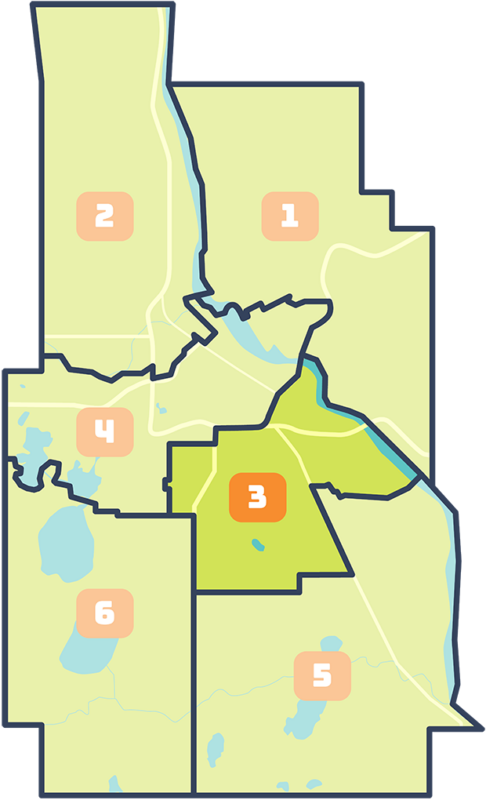
Distrito 3
Todo Phillips y algunos sectores de Powderhorn (Central, Corcoran, Powderhorn Park) y algunos sectores de University (Cedar-Riverside, Nicollet Island).
- Andersen Middle
- Green Central Elementary
- Heritage Academy High
- Seward Elementary
- South High
- Whittier Elementary

Shannon
Gibney
Distrito 3
Las respuestas reflejan los puntos de vista de los candidatos y no representan a Get On Board ni a ninguna de las organizaciones asociadas.
Tell us about yourself and why you are running for MPS school board.
Mi nombre es Shannon Gibney y me postulo para ocupar el cargo correspondiente al Distrito 3 en el consejo escolar de las Escuelas Públicas de Minneapolis (MPS). Soy escritora y profesora. Desde hace muchos años formo parte de la comunidad de familias del distrito y soy residente de Powderhorn. Mis hijos estudian en South High School y Andersen Middle School. Los dos asistieron a Bancroft Elementary School y recibieron una educación increíble tanto en el ámbito social y cultural como en el académico.
Desafortunadamente, el Distrito 3 no ha tenido una representación sólida y constante en el consejo escolar de las MPS desde hace varios años, lo que obviamente es problemático. Tenemos estudiantes y familias con una gran diversidad cultural en las escuelas de esta zona, así como la mayor concentración de estudiantes del idioma inglés (ELL) en los niveles de escuela secundaria y escuela intermedia del distrito. Muchas de nuestras familias ya tenían dificultades para cubrir sus necesidades básicas antes de la invasión del Servicio de Inmigración y Control de Aduanas (ICE), y eso no hizo más que agravar los desafíos que enfrentan.
Como miembro activa de las Familias de Minneapolis por las Escuelas Públicas (MFPS), luché junto con otros padres de todo el distrito por establecer límites exigibles para reducir el tamaño de las clases y las cargas de casos de educación especial (SPED) y ELL durante las negociaciones del contrato de la Federación de Educadores de Minneapolis (MFE) del otoño pasado.
Durante la invasión del ICE, fui la responsable de las MFPS en South High como escuela santuario, y ayudé a coordinar y establecer redes esenciales de ayuda mutua para alimentos, alquiler y transporte, así como patrullas escolares.
Me postulo porque creo que puedo ejercer un liderazgo fundamental para impulsar al gobierno estatal y local a invertir completamente en las escuelas públicas. Quiero trabajar para cambiar la cultura del consejo escolar e implementar cambios que garanticen que el distrito rinda cuentas ante la comunidad.
What are your thoughts on giving individual schools more autonomy over budget, staffing, curriculum, and scheduling decisions? What are the benefits and risks of school-level flexibility?
Esta es una pregunta compleja porque hay algunas áreas del presupuesto en las que las escuelas individuales pueden tener mucha autonomía y otras que están determinadas por los gobiernos federal, estatal y local. El dinero destinado a la SPED y los ELL, por ejemplo, es un área en la que los directores de cada escuela suelen tener menos autonomía, ya que los gobiernos federal y estatal tienen pautas estrictas sobre cómo debe utilizarse. En el presupuesto del año siguiente, los directores también tienen menos margen para realizar gastos discrecionales que en años anteriores, ya que tuvieron que brindar clases más pequeñas en todo el distrito, algo por lo que las familias y los docentes lucharon durante las negociaciones contractuales.
Dicho esto, cada escuela del distrito es diferente, tiene distintos estudiantes, familias, necesidades, prioridades y recursos. Siempre que sea posible, los directores y líderes escolares deben trabajar con los docentes, las familias y los miembros de la comunidad para identificar las áreas qué más se beneficiarían del uso de fondos discrecionales. Deberían tener un comité de presupuesto que se reúna periódicamente para tomar estas decisiones difíciles. Algunas escuelas tienen comités de presupuesto funcionales y competentes, y otras no. Obviamente, en las escuelas que no tienen estos comités, cuando surgen desacuerdos sobre el presupuesto (y actualmente hay muchos gracias al déficit proyectado de $39 millones que enfrenta el distrito), hay mucha más fricción entre la administración escolar y la administración del distrito, por un lado, y los docentes y las familias de la escuela, por el otro.
También existe la percepción de que el distrito permite que algunas escuelas tengan más autonomía que otras en cuestiones como los horarios, la asignación de personal, los presupuestos, etc., lo que también genera resentimiento. Estas políticas y procedimientos deberían ser consistentes en todo el distrito.
MPS enrollment has dropped by roughly 8,000 students since 2017, and it is projected to keep declining. Is increasing enrollment a viable solution to the budget crisis? If yes, what's your strategy? If no, how would you rightsize the budget instead?
La disminución de la inscripción sigue siendo un gran problema en las MPS. Perdimos al 20 % de nuestros estudiantes y familias debido al desastroso Diseño Integral del Distrito (CDD), que se implementó durante la pandemia, modificó las trayectorias educativas de los estudiantes y enfureció a muchas familias. Sin embargo, incluso antes de eso ya estábamos perdiendo estudiantes que optaban por escuelas autónomas y por escuelas en otros distritos. No creo que el distrito haya hecho un esfuerzo importante y decidido por convencer a la comunidad de que las MPS son el mejor distrito para todos los estudiantes que viven en la ciudad. Esta será una de mis principales prioridades en términos de generar más ingresos y recursos y garantizar que no sigamos cayendo en estos déficits presupuestarios año tras año.
Lo más importante que puede hacer el distrito para aumentar la inscripción es crear más establecimientos de prekínder y kínder con opciones multilingües a fin de incorporar a las familias interesadas desde el principio y lograr que se integren al distrito y a sus trayectorias educativas. Sé que el liderazgo del distrito y el consejo actual están analizando posibles maneras de implementar algunas de estas ideas. También perdemos estudiantes en los puntos de transición, especialmente al pasar de la escuela primaria a la escuela intermedia. Tenemos que analizar por qué algunas familias deciden no continuar en el distrito en esos momentos y qué podemos hacer para retenerlas.
No resolveremos los problemas presupuestarios de las MPS únicamente aumentando las inscripciones. El financiamiento estatal para las escuelas no se ajusta a la inflación desde hace décadas, por lo que los distritos de todo Minnesota, y del país, enfrentan déficits todos los años. Al trabajar con los padres, los políticos y las partes interesadas de las MPS y de todo el estado, ayudaré a construir coaliciones y generar el poder necesario para financiar completamente la educación pública.
Por último, debemos reestructurar el Departamento de Finanzas de las MPS con políticas, procedimientos y supervisión que garanticen que el distrito utilice los fondos de manera que fortalezca nuestra solvencia fiscal y la confianza de la comunidad, en lugar de debilitarlas.
What do you see as the role of parent, student, and community voice in decisions that affect the Minneapolis Public Schools?
El distrito debe rendir cuentas ante las familias y las comunidades en las decisiones que afectan a las MPS. Es así de simple. En un distrito que funciona bien, quienes toman las decisiones interactúan periódicamente con las familias, los miembros de la comunidad y los estudiantes. Los escuchan atentamente, incorporan sus ideas a las operaciones diarias y a largo plazo de las escuelas, y saben qué está sucediendo en cada establecimiento.
En resumen, el liderazgo del distrito y el consejo escolar deben rendir cuentas ante la comunidad. Desafortunadamente, esto no es lo que sucede en las MPS. Las familias están desconectadas de la administración escolar, del distrito y del liderazgo del consejo. Hay diferentes reglas para los distintos responsables en distintos establecimientos. La transparencia en relación con el presupuesto y recursos está mejorando, pero todavía no está donde debería estar.
En una reunión reciente del consejo escolar, mientras terminaba la operación Metro Surge, me sorprendió que ningún miembro del liderazgo del distrito y solo un miembro del consejo mencionara el trabajo heroico que realizaron las familias, el personal y los miembros de la comunidad en las escuelas de todo el distrito para mantener a salvo a las familias y los estudiantes vulnerables: desde la ayuda con alimentos y alquiler (¡recaudamos más de $4 millones solo para asistencia con el alquiler!), hasta las patrullas escolares, el transporte y más. Más que cualquier otra cosa este año, eso me demostró lo desconectados que están la mayoría de los líderes del distrito y del consejo de las preocupaciones y la vida cotidiana de las familias a las que se supone que deben servir. La manera de arreglar esto es fomentar y apoyar relaciones reales con las personas y las familias en cada una de las escuelas del distrito. En otras palabras, hay que ensuciarse las manos, participar activamente y acercarse a las comunidades en las que vivimos, trabajamos y a las que servimos.
A recent poll found that over 90% of parents are concerned that children in MPS are not reading on grade level. What steps will you take to address these concerns and improve grade-level reading?
Como madre de raza negra de hijos de raza negra, además de escritora y profesora de escritura de raza negra con 25 años de trayectoria, me tomo la alfabetización muy, muy en serio. Es la base de una población educada, que a su vez es la base de una democracia educada y funcional, la cual, obviamente, está en peligro en este momento. Desafortunadamente, las tasas de alfabetización están disminuyendo en todo el país, no solo entre los estudiantes de kínder al 12.º grado, sino también entre los adultos. Entre las razones se encuentra, y no es la menor, nuestra adicción a las pantallas. Las tasas de alfabetización de las MPS están justo por debajo del promedio nacional y son aún más bajas entre los estudiantes de raza negra, indígenas y de color (BIPOC), lo que también constituye una tendencia a nivel nacional. Esto es algo a lo que debemos prestar atención y analizar cómo podemos mejorar. Sé que el liderazgo del distrito y los docentes están trabajando en ello mediante nuevas capacitaciones para enseñar fonética a los estudiantes y otros enfoques.
Sin embargo, lo principal que quiero tratar es que existe un impulso por parte de la extrema derecha y de los demócratas conservadores de utilizar la idea de “tasas de alfabetización decrecientes en las escuelas públicas” como una excusa para decir que “las escuelas públicas están fracasando”. Si le preguntamos a cualquier persona si le preocupan las “tasas de alfabetización decrecientes en las escuelas”, claramente dirá que sí. Si a eso le sumamos algo sobre cómo los estudiantes de raza negra y morenos (que es la manera en que estos grupos de expertos, organizaciones y políticos conservadores, predominantemente blancos, lo plantean) tienen tasas de alfabetización cada vez más bajas, el público pensará automáticamente que se trata de una cuestión de justicia racial. Pero las tasas de alfabetización decrecientes constituyen un problema en todos los sectores de nuestra sociedad, independientemente de la raza, la clase social o de si se trata de una escuela pública, privada o autónoma. Es por eso que me preocupa la manera en que se plantea esta pregunta, cómo se utiliza y con qué fin. Necesitamos ser mucho más críticos con el uso de argumentos nebulosos sobre las “tasas de alfabetización” que se movilizan para menospreciar a las escuelas públicas. Por último, las investigaciones demuestran que la mejor manera de fomentar una alfabetización sólida en las aulas del kínder al 12.º grado es reducir el tamaño de las clases. Si realmente estamos comprometidos con aumentar las tasas de alfabetización, debemos invertir en ello.
Conozca las características de la votación
Todos los residentes de Minneapolis pueden votar por un candidato general, pero también pueden votar por un candidato específico para el distrito.