Get to know the candidates
Filter By District
School board elections in Minneapolis are held every two years. In 2026, Districts 1, 3, 5, and two at-large seats are up for election.
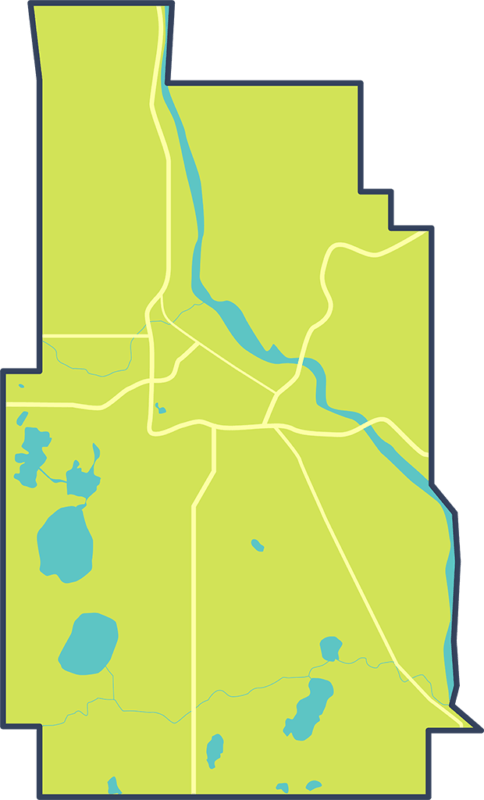
At Large
All Minneapolis neighborhoods.
All Minneapolis elementary, middle, and high schools.

Collin
Beachy
At Large
Responses reflect candidates’ own views, and are not a reflection of Get On Board or any partner organizations.
Tell us about yourself and why you are running for MPS school board.
For more than two decades, I’ve dedicated my career to public education and student support. Before serving as Chair of the MPS Board of Education, I worked directly with students and families in classrooms, behavioral support programs, and student services roles across Minnesota.
I didn’t enter education through politics. I entered this work because I believe every student deserves adults who will advocate for them, support them, and refuse to give up on them.
As a special education teacher working primarily with students receiving Emotional and Behavioral Disorder (EBD) and Autism Spectrum Disorder (ASD) services, I’ve spent my career helping young people navigate challenges while building systems of support around them. That experience continues to shape how I lead as Board Chair.
I’m running for re-election because Minneapolis is at a pivotal moment. We’ve begun the difficult but necessary work of transforming our district into one that is financially sustainable while ensuring every student—regardless of their neighborhood—has access to a high-quality public education. I believe we need experienced, steady leadership to continue that work with accountability, collaboration, and a clear vision for the future.
It has been an honor to serve the students, families, and educators of Minneapolis, and I would be honored to continue serving our community.
What are your thoughts on giving individual schools more autonomy over budget, staffing, curriculum, and scheduling decisions? What are the benefits and risks of school-level flexibility?
I believe decisions should be made as close to students as possible but within a coherent districtwide vision. Schools already exercise significant autonomy through their Site Councils and Instructional Leadership Teams as they develop School Improvement Plans that reflect the unique needs of their students and neighborhoods.
At the same time, the Board’s responsibility is to ensure every student has access to a high-quality, consistent educational experience. Schools should have the flexibility to meet local needs, but no child should receive a fundamentally different education simply because of the school they attend. The right balance is empowering school leaders while maintaining districtwide expectations that promote equity, consistency, and accountability.
MPS enrollment has dropped by roughly 8,000 students since 2017, and it is projected to keep declining. Is increasing enrollment a viable solution to the budget crisis? If yes, what's your strategy? If no, how would you rightsize the budget instead?
Increasing enrollment is absolutely part of the solution—but it cannot be the only solution. Parents don’t choose schools because of advertising; they choose schools because they trust the experience their children will have.
Our transformation work recognizes that increasing enrollment and improving the student experience go hand in hand. The Board has directed the administration to develop strategies not only to attract new students but also to retain the families who already choose MPS. That includes strengthening early childhood pathways by engaging Pre-K and Kindergarten families, improving transition experiences into middle school, and ensuring students receive a high-quality educational experience from the day they enroll through graduation.
At the same time, we must make responsible financial decisions based on today’s enrollment—not the enrollment we hope to have five years from now. Building long-term trust with families requires both educational excellence and financial sustainability.
What do you see as the role of parent, student, and community voice in decisions that affect the Minneapolis Public Schools?
Listening is one of the Board’s most important responsibilities—but listening doesn’t always mean agreeing. Everyone deserves to be heard, and Board decisions should be transparent and grounded in the best interests of students.
As we continue making difficult decisions, Board members must carefully weigh the perspectives of parents, educators, students, and community members. Ultimately, our responsibility is to all 28,000 students in Minneapolis Public Schools—not just the loudest voices in the room. Effective leadership means listening to everyone while making decisions that serve the long-term success of every student.
A recent poll found that over 90% of parents are concerned that children in MPS are not reading on grade level. What steps will you take to address these concerns and improve grade-level reading?
Reading is the foundation for everything else we ask students to do. Over the past two years, Minneapolis Public Schools has been implementing the Science of Reading through the READ Act, with recent data showing that 86% of teachers have completed their required training and are applying these evidence-based instructional practices in their classrooms.
Early intervention is essential. We have prioritized manageable class sizes through our labor agreements and are expanding targeted, high-dosage tutoring for students who need additional support. While recent student growth data is encouraging, growth alone is not enough. We must continue holding ourselves accountable for increasing grade-level reading proficiency so every student has the opportunity to succeed.
Know Your Ballot
All Minneapolis residents can vote for an at-large candidate, but you can also vote for a district-specific candidate.